<style> html.hg-barra-propia { scrollbar-width: auto; } html.hg-barra-propia::-webkit-scrollbar { display: block; } </style>
Back to the catalogue

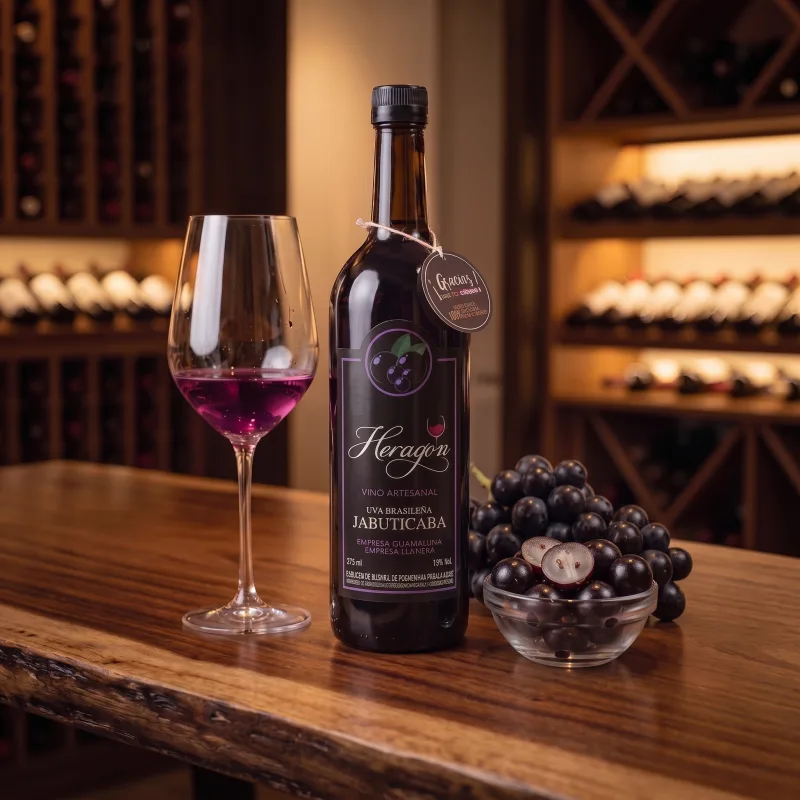
Jabuticaba Wine

From the jabuticaba, the Brazilian grape that grows straight off the trunk of the tree. It gives a wine of deep colour and dark fruit. We make it when there is fruit, so there is not always some.

  • 750 mlPresentation
  • 12 % vol.12 % vol.
  • SemisecoOff-dry

How to get it We ship it Seasonal

  • Jabuticaba Wine

Jabuticaba Wine

About this product

What it is, what makes it different and who we make it for, in a few words.

A fruit wine made from jabuticaba, the so-called Brazilian grape: a glossy black fruit that grows straight off the trunk of the tree.

It is an off-dry wine, deep garnet in colour, with dark-fruit notes — blackberry, ripe cherry — and soft tannins that give it body without making it heavy. On the nose it is intense and fruity, and on the palate it is rounded, with a balanced acidity that makes it easy to drink. It is closer to a young red than to a sweet fruit wine, and that is exactly what surprises people the first time they taste it.

It is a seasonal wine: we only make it when the trees bear fruit, a couple of times a year, and each batch is limited. It comes in a 750 ml bottle at 12 % ABV and is handmade in Guamal. A good choice for anyone looking for something different from the usual grape wines without giving up a glass with character.
Features

The basics to recognise it at the table and know how to treat it.

  • Presentation750 ml
  • 12 % vol.12 % vol.
  • Off-drySemiseco
  • BottleDark green glass bottle, cork stopper
  • Serving temperature12 to 14 °C
  • Seasonal

A tree that fruits on its trunk

The first time you see a jabuticaba tree in full fruit it is hard to believe: the whole trunk covered in small black spheres pressed against each other, and the leaves up top as if they had nothing to do with it. First come tiny white flowers, also stuck to the bark, and within a few weeks they turn into fruit.

The trees we use grow in back yards around Guamal. Some were planted decades ago by families who brought the seed from elsewhere, and for years the fruit was eaten by the handful or simply fell to the ground with nobody making use of it.

We started making wine from it for the same reason we did with cacao pulp: it was good fruit going to waste. The difference is that here it is the tree, not the farm, that sets the pace, and you have to keep an eye on it so the harvest doesn’t slip by.

How it’s made

Five steps that begin on harvest day and end several months later.

  1. Picking by hand

    The ripe fruit is picked straight off the trunk, one by one, first thing in the morning before the heat softens it.

  2. Crushing with the skins

    It is washed and crushed whole. The skins stay with the juice, because they are what will give the wine its colour and tannins.

  3. Maceration and fermentation

    For the first week the must ferments together with the skins. Then they are separated and fermentation carries on by itself for about three more weeks.

  4. Racking and resting

    It is racked several times to leave the sediment behind, and rests until the colour and flavour settle.

  5. Bottling

    It is bottled, corked and labelled by hand at the workshop, batch by batch.

What to serve it with

With its colour and soft tannins, it works like a light red. It goes very well with grilled meat, with a chicken sancocho or a Llanos-style picada, and happily stands up to the fat of a good chorizo.

With cheese, semi-cured is better than very fresh. And dessert is where it surprises: with a brownie, with strawberries or with a square of 65 % chocolate, the wine’s dark fruit and the cacao get along effortlessly.

For every occasion

No special occasion needed: this is how people who know it drink it.

  • Chilled, in a glass

    At 12 to 14 °C in a red-wine glass: the dark fruit comes through without the alcohol hiding it.

  • In sangria

    With orange slices, a cinnamon stick and plenty of ice: a jug for the afternoon.

  • After dinner

    A small glass at the end of a meal, on its own or with a square of chocolate.

  • For cooking

    A splash in a reduction for meat or in a red-berry sauce.

  • As a gift

    A fruit almost nobody has tasted as wine: a gift that starts a conversation.

Where to find it

We take it to markets and fairs around the region: you can taste it there before buying.

  • From Tree to Glass: A Morning on the Farm

    Limited places

    From Tree to Glass: A Morning on the Farm

    A morning on the farm following cacao from start to finish: cutting pods, extracting the pulp, seeing how the beans ferment and ending with a tasting of the wine and chocolate they become.

    The family farm, Pío XII rural district · Guamal, Meta

  • Pío XII hamlet farmers’ market

    Pío XII hamlet farmers’ market

    The market in the hamlet where the workshop is. It is the closest one to where everything is made, so here we usually have whatever came out that week, including what does not travel.

    3 km from the town centre · Guamal, Meta

How to get to the workshop

If you’d rather pick it up in person, we’ll see you at the farm. Message us first so someone is there.

Heragon workshop · Vereda Pío XII, 3 km from the centre of Guamal, Meta

  • By car From Villavicencio, take the road to Acacías and Guamal: about an hour. In Guamal, head for Vereda Pío XII; it’s 3 km.
  • By bus Buses from Villavicencio to Granada or San Martín stop in Guamal. From the main square, a moto-taxi will drop you at the workshop.
  • Parking There’s room for three or four cars in front of the workshop; if you’re coming as a group, let us know.
  • Opening hours By appointment: message us on WhatsApp a day ahead and we’ll be waiting.

The road to the vereda isn’t always signposted: if you get lost, call us and we’ll guide you to the door.

Coordinates3.9039° N · 73.7962° W

The link opens the location on your phone and plots the route from wherever you are.

Open in Google Maps

What people ask about jabuticaba wine

Hardly anyone has tasted a jabuticaba, so the questions usually start with the fruit.

What is a jabuticaba?

A tree from Brazil whose fruit, black and the size of a grape, grows directly on the trunk. Inside it is white, juicy and sweet-and-sour.

Is it a sweet wine?

It is off-dry: it keeps a touch of the fruit’s sweetness, but the acidity and the tannins from the skins balance it out.

Why isn’t it always available?

Because we only make it when the trees bear fruit, a couple of times a year. When a batch runs out, we have to wait for the next harvest.

Is it normal for it to have sediment?

Yes. We don’t filter it completely so as not to strip its body. Just pour it slowly and leave the last finger in the bottle.

How long does it last once opened?

Corked and in the fridge, about a week. After that it starts to lose its fruit.

Good to know

What to know to store it and enjoy it at its best.

  • Drink responsibly

    Excessive alcohol consumption is harmful to your health. Sale to minors is prohibited.

  • Seasonal product

    Stock depends on the harvest. If you’re interested, message us and we’ll let you know when the next batch is out.

From the people who have already tried it

Unfiltered and unedited. These are messages from people who bought something and wanted to say so.

  • Suave y fácil de tomar. Lo acompañamos con una tabla de quesos y quedó perfecto.

    Paola V.

    Medellín

  • I had never heard of jabuticaba and now I look for it everywhere. The wine is sweet without being cloying, with a finish like ripe grapes. I took it to a dinner and it was the first thing to run out.

    Translated from Spanish

    Paula G.

    Bogotá

  • I'd never heard of jabuticaba and now I look for it everywhere. The wine has a beautiful colour and a pleasant wild-grape flavour.

    Translated from Spanish

    Carlos Arturo V.

    Bogotá

Have you tried it?

Tell us what you thought. We read every one, and the ones we publish appear here with your name.

  • One minute
  • We read it before publishing
  • No email or phone needed

You might also like

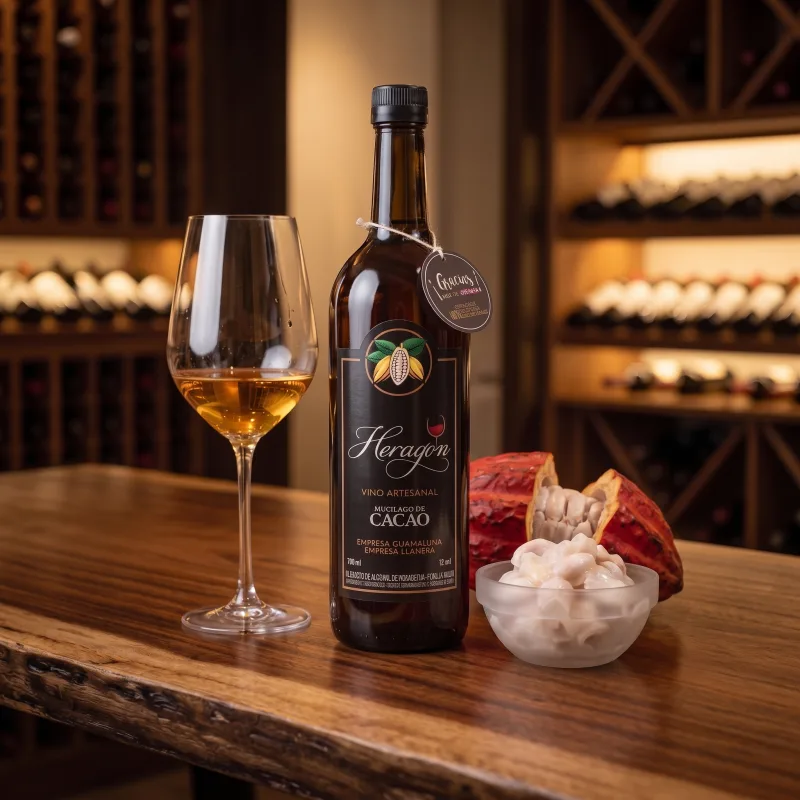
  • From the pulp

    Cacao Wine

    Cacao Wine

    From the pulp, collected the same day the pods are cut, before it ferments on its own in the box. Dry, with ripe fruit, and no chemicals or preservatives. It is the product everything started with.

    • 12 % vol.
    • Seco
    750 ml We ship it
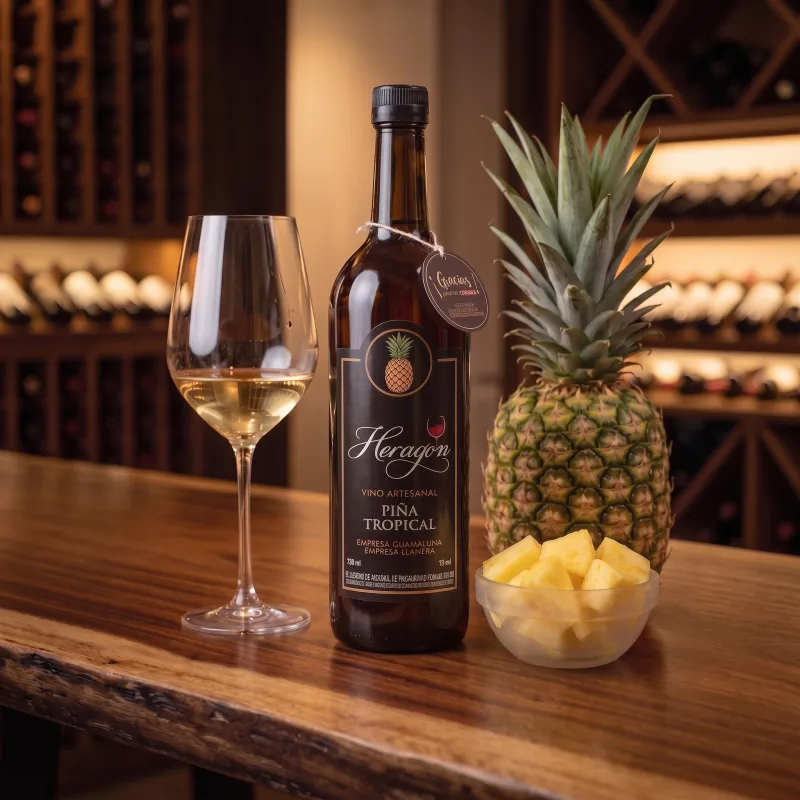
  • Tropical Pineapple Wine

    Tropical Pineapple Wine

    Ripe pineapple fermented slowly, down to a clear, light wine. It is the freshest of the three and the one we repeat least often: it also depends on the season.

    • 12 % vol.
    750 ml We ship it

Want us to send it?

Write to us and we'll tell you whether we have it, how long it takes and how it arrives. If you're nearby, you can also drop by the workshop.

Message us on WhatsApp

+57 313 410 9847